
“Why England’s biggest challenge may not be talent—but managing energy when it matters most.”
Workplace burnout and performance under pressure may seem worlds apart from a World Cup Final.
Yet by the latter stages of a major football tournament, even the best players in the world are no longer operating at full capacity.
They have sprinted, tackled, travelled, recovered, reset and gone again.
They have carried the pressure of a nation, dealt with injuries, endured extra time, faced penalties and still been expected to deliver when it matters most.
Sound familiar?
Millions of employees facing workplace burnout are doing something remarkably similar every day.
As England prepare for another World Cup campaign, most conversations will focus on tactics, formations and whether players like Harry Kane, Jude Bellingham, Declan Rice and Bukayo Saka can finally help bring football home.
But behind the scenes, sports scientists and coaches are asking a different question.
Not simply:
“How talented are they?”
But:
“How much performance can they still produce when fatigue arrives?”
Because the team that wins the World Cup is not always the freshest team.
Often, it is the team that manages its energy most effectively.
The Stat Nobody Talks About
Most football fans focus on goals, assists, possession and shots on target.
Sports scientists focus on something else:
Performance Retention.
In simple terms:
How much of a player’s normal performance remains as fatigue builds?
Research into elite football shows that when matches go beyond 90 minutes, performance begins to change in measurable ways.
During extra time, players perform fewer sprints, cover less high-speed distance and complete fewer successful dribbles than earlier in the match.
Sports scientists have found sprint performance can fall by more than 20%, while high-speed running can decline significantly as fatigue accumulates.
The question isn’t whether fatigue arrives.
The question is:
How much of your performance remains when it does?
Players are not machines.
Every sprint.
Every tackle.
Every flight.
Every recovery session.
Every emotional high and low.
It all takes a toll.
Yet somehow they still have to produce moments of brilliance.
The winning goal.
The decisive save.
The perfect penalty.
Fatigue does not just make people tired.
It can make them slower.
More emotional.
More reactive.
More likely to make mistakes.
More vulnerable to injury.
More at risk of burnout.
Whether you are taking a penalty in a World Cup semi-final or presenting to the board on a Friday afternoon, the challenge is remarkably similar.
Can you still perform when your energy is running low?
England’s Energy Challenge
As England progress through the tournament, players such as Harry Kane, Jude Bellingham, Declan Rice and Bukayo Saka won’t just be carrying the hopes of a nation.
They’ll be carrying the accumulated workload of another demanding season.
This is where sports scientists become fascinated.
Because fatigue isn’t simply about tired legs.
As physical energy declines, reaction times can slow, concentration can dip, decision-making becomes harder and recovery takes longer.
The challenge isn’t whether elite players become fatigued.
The challenge is how much of their performance they can retain when fatigue inevitably arrives.
This is why tournament football is often won by squad depth rather than star quality alone.
Watch England’s bench.
Jordan Henderson.
Anthony Gordon.
Ivan Toneys.
Eberechi Eze.
Ollie Watkins.
Fresh substitutes entering a game after 70 minutes can often outperform players who have been battling fatigue for over an hour.
That’s why tournaments are often won by squads rather than starting elevens.
Which is why the question isn’t simply:
“How good are England’s best players?”
It’s:
“Who can still perform when everyone else is running on fumes?”
Perhaps the same question applies in the workplace.
When pressure builds, deadlines loom and energy levels begin to drop, the people who succeed are rarely those who never get tired.
More often, they’re the people who know how to manage their energy, seek support and use the bench around them before fatigue turns into burnout.
Argentina’s Masterclass
Argentina’s 2022 World Cup victory offers a masterclass in performance under pressure.
Their route to lifting the trophy included:
⚽ 120 minutes against the Netherlands
⚽ A penalty shootout against the Netherlands
⚽ A semi-final
⚽ 120 minutes against France
⚽ A penalty shootout in the Final
By the time the trophy was lifted, fatigue wasn’t a possibility.
It was a certainty.
Yet they still found a way to perform when the stakes were highest.
Not because they avoided fatigue.
Because they managed it.
They managed their energy.
Their emotions.
Their squad.
Their pressure.
Better than everyone else when it mattered most.
The lesson?
Winning isn’t always about avoiding fatigue.
It’s about managing it better than everyone else.
Watch The Bench
As England progress through the tournament, don’t just watch the starting eleven.
Watch the bench.
Watch the substitutions.
Watch the fresh legs entering the game when others are beginning to tire.
In football, that might mean rotating players, making substitutions, resting someone carrying a knock or changing the system before fatigue turns into failure.
In the workplace, it means something very similar.
It means checking in before stress becomes burnout.
It means sharing workload across the team.
It means asking for support before reaching breaking point.
It means taking proper breaks, using annual leave and treating recovery as part of performance rather than a reward for surviving pressure.
⚽ From The Pitch To The Workplace
| ⚽ What Elite Football Teams Do | 👔 Workplace Equivalent |
|---|---|
| ⚽ Monitor player fatigue before performance drops | 👔 Check in with colleagues before stress becomes burnout |
| ⚽ Rotate players to keep legs fresh | 👔 Share workload across the team |
| ⚽ Bring substitutes off the bench | 👔 Ask for support from colleagues, managers or your network |
| ⚽ Schedule recovery days between matches | 👔 Take annual leave, breaks and recovery time |
| ⚽ Analyse performance data | 👔 Have regular wellbeing conversations |
| ⚽ Rest injured players | 👔 Encourage recovery rather than presenteeism |
| ⚽ Build resilience through coaching and support | 👔 Invest in learning, mentoring and wellbeing support |
| ⚽ Prepare for extra time and penalties | 👔 Prepare for deadlines, change and periods of pressure |
If the Three Lions are to go all the way, it won’t be because eleven players carried the weight of a nation on their shoulders.
It will be because a squad, coaches, support staff and substitutes worked together to get over the line.
Nobody wins a World Cup alone.
And nobody should have to navigate burnout alone either.
⚽ Who’s On Your Bench?
When footballers begin to tire, managers rarely wait until they collapse on the pitch.
They act early.
They notice the signs.
They make changes.
The same principle applies at work.
| ⚽ Football Manager | 👔 Workplace Leader |
| ⚽ “He’s looking tired. Let’s make a substitution.” | 👔 “You’ve seemed under pressure recently. How are things?” |
| ⚽ “Let’s reduce his workload before injury occurs.” | 👔 “Do we need to look at your workload?” |
| ⚽ “He needs recovery before the next game.” | 👔 “When was the last time you took annual leave?” |
| ⚽ “Let’s bring fresh legs onto the pitch.” | 👔 “Who can help share some of the workload?” |
| ⚽ “We need him fit for the rest of the tournament.” | 👔 “We need to support you for the long term, not just this week.” |
The goal is not to remove pressure completely.
Pressure is part of performance.
The goal is to make sure people have enough support, recovery and resources to perform sustainably.
Because everyone needs a bench.
Nobody can play every minute of every match.
Before You Burn Out, Ask Yourself: Who’s On Your BENCH?
The BENCH framework can help identify the warning signs of workplace burnout before they become a more serious issue.
| BENCH | Question To Ask Yourself |
| B – Breaks | Am I taking regular breaks, or am I simply powering through? |
| E – Energy | What is my energy level today? Am I running on empty? |
| N – Network | Who can support me professionally or personally when things become difficult? |
| C – Conversations | Have I actually told anyone how I am feeling, or am I hoping they will notice? |
| H – Holidays | When was the last time I properly switched off and recovered? |
Elite footballers do not wait until they are injured before seeking support.
Their performance is monitored continuously.
Their workload is managed.
Their recovery is prioritised.
Their bench is always ready.
Yet many people continue to play every minute of every match, every day of every week, often without telling anyone they are struggling.
Perhaps the better question is not:
“How resilient am I?”
Perhaps it is:
“Who is on my BENCH when I need support?”
Resilience is not about proving you can carry the load alone.
Sometimes resilience is recognising when it is time to pass the ball.
The Penalty Shootout Effect
One of the biggest myths in football is that penalties are purely technical.
They are not.
The player stepping forward in the 120th minute is managing:
⚽ Physical fatigue
⚽ Mental fatigue
⚽ Emotional fatigue
⚽ Pressure
⚽ Adrenaline
⚽ Expectation
⚽ Noise
That moment is not just about technique.
It is about performance under strain.
That is not so different from presenting to a board after a demanding week, leading a difficult conversation, managing a crisis or making an important decision when your energy is at its lowest.
The player taking that penalty is not performing in ideal conditions.
They are performing despite those conditions.
That is where resilience really lives.
Your Brain Has A Fixture List Too
Your brain has rhythms, just like a football season.
Throughout the day, most people naturally move through periods of focus followed by dips in energy and concentration.
Scientists refer to these as ultradian rhythms.
Elite athletes respect recovery.
Many professionals ignore it.
Instead, we:
☕ Grab another coffee
📱 Check our phones
💻 Push through
🌙 Stay later
Then wonder why our performance declines.
Recovery is not a reward.
Recovery is part of the performance process.
Workplace Burnout and the Myth of Unlimited Performance
Somewhere along the way, many workplaces convinced themselves that people should be able to perform at 100%.
Every day.
Every week.
Every month.
Every year.
Without rest.
Without recovery.
Without consequence.
Elite sport abandoned that idea years ago.
Many workplaces are still catching up.
Perhaps that is why conversations around wellbeing, burnout, flexible working and even the four-day week continue to gain momentum.
The question is not whether people can work hard.
Of course they can.
The better question is:
How long can people perform well without adequate recovery?
Sweet Caroline
If England reach the World Cup Final and the nation erupts into another chorus of:
“Sweet Caroline… da da da…”
remember what you do not see.
The recovery sessions.
The sports psychologists.
The sleep planning.
The nutrition support.
The workload monitoring.
The substitutions.
The rest days.
And perhaps most importantly…
The moments when coaches decided that recovery was more important than one more training session.
Success is celebrated in the spotlight.
But performance is built in the recovery periods between the big moments.
The same principle applies in football.
The same principle applies in business.
The same principle applies in leadership.
The same principle applies in life.
Before asking whether your team can work harder, perhaps ask a better question:
Do they have enough left in the tank to perform when it matters most?
And before asking how resilient you are, ask yourself:
Who’s On Your BENCH?
Because whether you’re preparing for a World Cup Final or a Monday morning team meeting, success is rarely about how hard you can push. It’s about how well you recover, adapt and perform when it matters most.
Further Reading
The ideas in this article are informed by research and analysis on fatigue, extra time, recovery and performance in elite football:
- The demands of the extra-time period of soccer: A systematic review
- Technical Performance Reduces during the Extra-Time Period of Professional Soccer Match-Play
- Extended Match Time Exacerbates Fatigue and Impacts Physiological Responses in Male Soccer Players
- Recovery following the extra-time period of soccer: practitioner perspectives and applied practices
- Rethinking extra-time in major national football tournaments
- FIFA: When 90 wasn’t enough
- FIFA: Argentina v France, 2022 World Cup Final
About Mike Lawrence
Mike Lawrence is a Health and Wellbeing Consultant, Mental Health First Aid England Instructor and workplace mental health speaker.
He works with organisations across the UK to strengthen wellbeing, resilience and performance through practical, real-world approaches that stand up under pressure.
His work focuses on:
- Supporting leaders and managers to respond confidently to mental health challenges
- Delivering Mental Health First Aid training that translates into real workplace impact
- Helping organisations move beyond awareness into meaningful cultural change
- Reducing burnout and building sustainable high performance
Explore More
- Mental Health First Aid Training
- Workplace Wellbeing Support
- Mental Health Speaker
- Leadership and Resilience Workshops
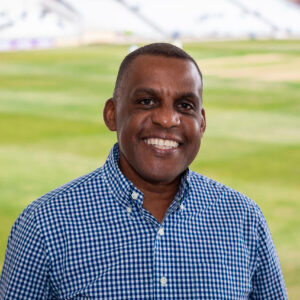
Mike Lawrence
Health and Wellbeing Consultant | Mental Health First Aid England Instructor | Speaker